

DTF Printer FAQ: Buying, Financing, Setup & Supplies
Get clear answers before buying a DTF printer. This guide covers printer sizes, beginner-to-commercial recommendations, DTF printer financing, ink, film, powder, maintenance, print cost, setup, training, and support.
What Size DTF Printer Do You Need?
The best DTF printer depends on your production volume, available space, budget, and growth goals. Use this quick guide to match your business stage with the right equipment.
Beginner
20–100 shirts per day: A Mantis XP style printer is a strong starting point for home-based shops, side hustles, and new apparel brands.
Growing Shop
100–500 shirts per day: A 13-inch Dual Head DTF printer gives better speed while still fitting smaller spaces.
Commercial
1,000+ shirts per day: A 24-inch 2-head DTF printer is better for higher-volume production and daily shop output.
Expert / High Volume
2,000+ shirts per day: A 24-inch 4-head DTF printer is built for serious commercial production and scale.
Jump to a FAQ Category
Buying a DTF Printer
1. What is a DTF printer?
A DTF printer is a Direct-to-Film printer that prints full-color artwork onto PET transfer film. The print is powdered, cured, and then heat pressed onto garments such as t-shirts, hoodies, uniforms, tote bags, and more.
2. What is the best DTF printer for beginners?
For beginners, the best DTF printer is usually a compact model that is easier to maintain and does not require the space of a full commercial setup. A Mantis XP style printer is a strong choice for beginner-to-mid-level production because it is designed for shops producing around 20–100 shirts per day.
3. What DTF printer should I buy for a growing t-shirt business?
If you are moving from hobby printing into steady business production, a 13-inch Dual Head DTF printer is usually the better fit. It gives more speed than a beginner unit while still working well in smaller spaces.
4. What DTF printer should I buy for commercial production?
For commercial production, a 24-inch DTF printer is usually the better choice. A 24-inch 2-head printer is a strong fit for serious production, while a 24-inch 4-head printer is better for high-volume shops producing thousands of transfers or shirts per day.
5. Should I buy a 13-inch or 24-inch DTF printer?
Choose a 13-inch DTF printer if you need a smaller footprint, lower startup cost, and moderate daily production. Choose a 24-inch DTF printer if you plan to print larger gang sheets, increase output, serve more customers, or grow into a commercial workflow.
6. Is DTF printing good for starting a t-shirt business?
Yes. DTF printing is popular for t-shirt startups because it works on many garment types, does not require screens, supports full-color artwork, and allows shops to print custom orders, gang sheets, brand merch, uniforms, and small-batch apparel.
7. What should I ask before buying a DTF printer?
Before buying, ask about production speed, warranty, training, tech support, replacement parts, software, ink system, shaker/oven compatibility, power requirements, maintenance steps, and whether financing is available.
Printer Size & Production Volume
8. What size DTF printer do I need from beginner to expert?
Here is a simple production guide:
- Beginner: Mantis XP style printer for 20–100 shirts per day.
- Growing shop: 13-inch Dual Head printer for 100–500 shirts per day.
- Commercial shop: 24-inch 2-head printer for around 1,000 prints in an 8–10 hour shift.
- High-volume expert shop: 24-inch 4-head printer for around 2,000 prints in an 8–10 hour shift.
9. How many transfers can a beginner DTF printer print per hour?
A beginner-to-mid-level unit like the Mantis XP can print around 25–30 transfers per hour, depending on artwork size, quality settings, workflow, and operator experience.
10. How many transfers can a 13-inch Dual Head DTF printer produce?
A 13-inch Dual Head DTF printer can be a strong fit for growing shops and may handle up to around 500 transfers per day, depending on design size, production schedule, curing setup, and workflow.
11. How many transfers can a 24-inch DTF printer produce?
A 24-inch 2-head DTF printer can produce around 1,000 prints in an 8–10 hour shift when properly set up and operated. A 24-inch 4-head model can produce around 2,000 prints in an 8–10 hour shift for higher-volume shops.
12. Do I need a DTF printer with a shaker and dryer?
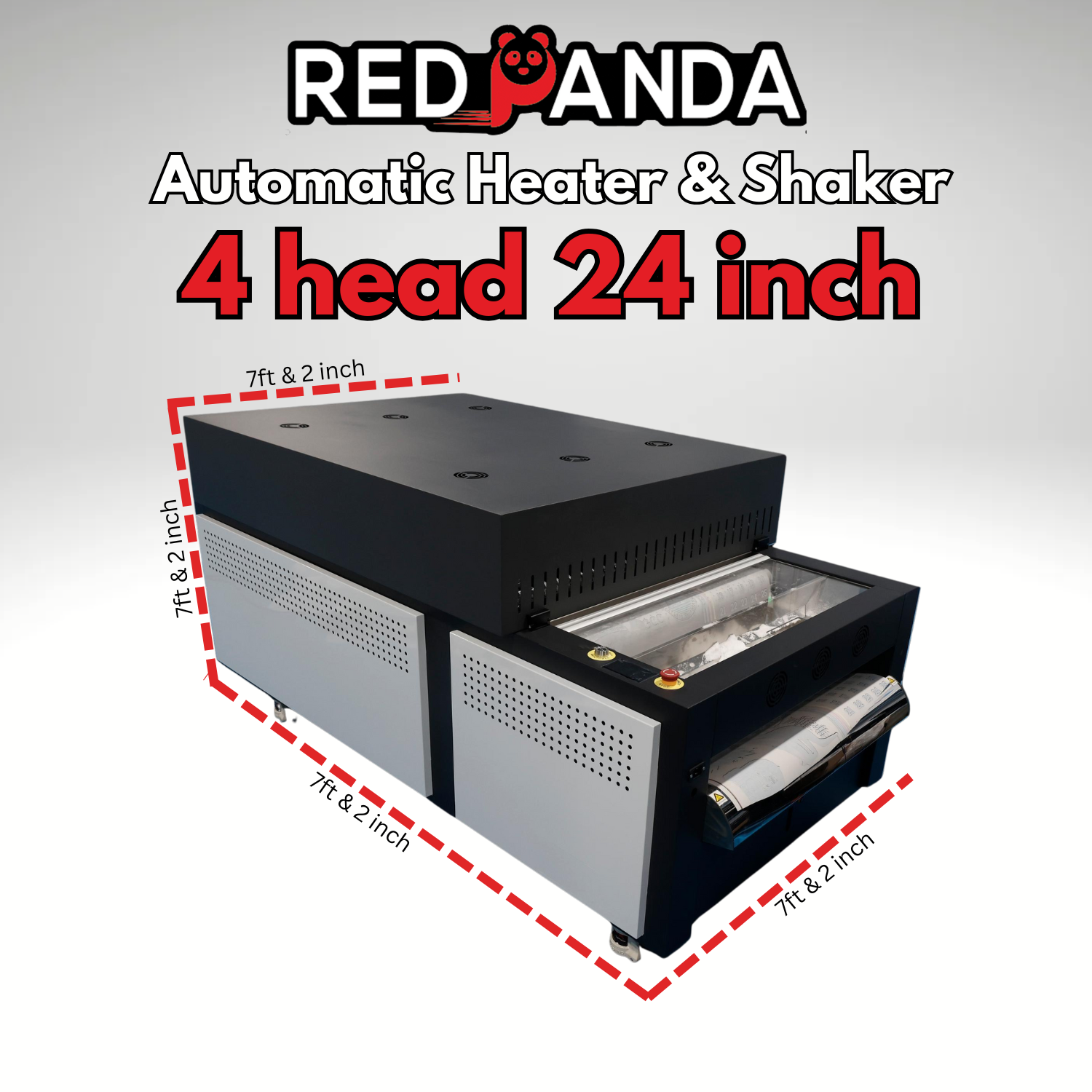
If you plan to produce consistently, a shaker and dryer are strongly recommended. They help apply powder evenly, cure transfers, improve workflow speed, and reduce manual labor compared to hand-powdering and curing every print.
13. Can I run a DTF printer from home?
Many smaller DTF printers can be operated from a home workspace, but you need enough room for the printer, film roll, curing setup, ventilation, supplies, heat press, computer, and maintenance area. Larger 24-inch systems are better suited for a shop, garage, warehouse, or commercial space.
14. When should I upgrade from a small DTF printer to a larger printer?
Upgrade when your printer becomes the bottleneck. If you are turning down orders, staying late to finish jobs, wasting time on small sheet layouts, or needing faster gang sheet production, it may be time to move to a 13-inch Dual Head or 24-inch DTF printer.
DTF Printing Cost & Profit
15. How much does it cost to print a DTF transfer?
The cost to print a DTF transfer depends on the size of the artwork, amount of ink used, film cost, powder cost, waste, labor, maintenance, and overhead.
Basic cost formula:
Film used + ink used + powder used + waste + labor + maintenance allowance = estimated transfer cost.
A small left-chest print costs less than a full-front print. A full gang sheet should be calculated by the inch, foot, or sheet size so you know your true cost before setting your selling price.
16. How do I calculate DTF film cost per transfer?
Take the price of the film roll and divide it by the total printable length. Then multiply that cost by the length of film used for the job. For example, if you use 10 inches of film, calculate the cost of those 10 inches based on your roll price.
17. How do I calculate DTF ink cost?
Ink cost depends on artwork coverage. Heavy white ink, large solid designs, and full-front prints use more ink than small logos or simple designs. Track your ink bottle cost, average usage, and job size to build a realistic cost-per-print estimate.
18. How much should I charge for DTF transfers?
Your selling price should cover consumables, labor, equipment wear, rent, software, mistakes, packaging, and profit. Many shops price single transfers by size and gang sheets by length. Do not price only from material cost because labor and overhead matter.
19. Is DTF printing profitable?
DTF printing can be profitable when you control material costs, reduce waste, maintain your printer, price correctly, and build repeat customers. Profit depends on your pricing, production speed, order volume, and how well your workflow is managed.
20. What affects profit the most in DTF printing?
The biggest profit factors are printer speed, artwork setup time, material waste, ink usage, labor, maintenance, customer volume, and pricing structure. A faster printer can help, but only if your order flow and workflow are organized.
DTF Ink, Film, Powder & Supplies
21. What supplies do I need for DTF printing?
You need a DTF printer, DTF ink, PET transfer film, DTF powder, curing equipment or shaker/dryer, heat press, RIP software, cleaning solution, maintenance supplies, and blank garments or products to press.
22. What size DTF film do I need?
Your film size should match your printer width. A 13-inch printer uses 13-inch film. A 24-inch printer uses 24-inch film. Make sure the film type matches your printer, ink, and production workflow.
23. What is 13-inch DTF film used for?
13-inch DTF film is used with smaller-format DTF printers. It is good for smaller transfers, left-chest designs, youth prints, logos, small gang sheets, and shops that do not need full 24-inch production width.
24. What is 24-inch DTF film used for?
24-inch DTF film is used with commercial DTF printers. It is better for larger gang sheets, bulk production, full-front prints, back prints, and shops producing higher order volume.
25. What is DTF powder?
DTF powder is a hot melt adhesive powder applied to the wet ink on the film. After curing, the powder helps the printed design bond to the garment during heat pressing.
26. What is DTF white ink used for?
White ink creates the backing layer that helps full-color designs show up on dark and colored garments. It is one of the most important parts of DTF print quality and must be maintained properly to reduce clogging.
27. Why does white ink need maintenance?
White ink contains heavier particles and can settle if it is not circulated, shaken, or maintained properly. Regular maintenance helps keep ink flowing and reduces clogging, banding, and print quality issues.
28. Can I use any DTF ink in my printer?
No. You should use ink that is compatible with your printer, printhead, RIP settings, color profile, and film. Using the wrong ink can cause color issues, clogging, poor adhesion, or damage to the ink system.
29. How should I store DTF ink, film, and powder?
Store DTF supplies in a clean, dry, temperature-controlled area. Keep film protected from moisture and dust. Keep powder sealed when not in use. Keep ink away from extreme heat, direct sunlight, and freezing temperatures.
DTF Printer Maintenance & Support
30. What maintenance does a DTF printer need?
DTF printers need regular nozzle checks, cleaning cycles, ink circulation, capping station care, wiper cleaning, printhead protection, waste ink checks, film path checks, and basic daily startup/shutdown maintenance.
31. How often should I do a nozzle check?
You should do a nozzle check before production and whenever print quality changes. A nozzle check helps you catch clogs, missing channels, and ink flow problems before wasting film and ink on customer jobs.
32. How long does a DTF printhead last?
A DTF printhead can last about 6–12 months depending on usage, ink quality, environment, and maintenance. Printheads are wear-and-tear parts, so proper maintenance is important.
33. Why do DTF printheads clog?
Clogs can happen from dried ink, poor maintenance, low humidity, improper shutdown, old ink, contaminated ink, lack of white ink circulation, or leaving the printer idle too long without proper care.
34. What should I do if my DTF printer is banding?
Start with a nozzle check. If nozzles are missing, perform the recommended cleaning process. Also check film feed, head height, print settings, encoder strip cleanliness, ink levels, dampers, and whether the artwork/RIP settings are correct.
35. Do DTF printers need daily use?
DTF printers perform best when used and maintained consistently. If the printer sits unused, ink can settle or dry in the system. Follow a proper maintenance schedule if you are not printing every day.
36. Does South Mid Supply offer DTF printer tech support?
Yes. South Mid Supply offers support, training, and guidance for customers. Support may include setup help, Zoom guidance, maintenance instruction, troubleshooting, and access to spare parts when available.
37. Do you stock DTF printer parts?
South Mid Supply carries DTF supplies and spare parts for supported equipment. Availability can vary by printer model, so contact us if you need printheads, cables, dampers, boards, cleaning supplies, or other printer parts.
Setup, Training & Software
38. Do you offer DTF printer setup and training?
Yes. Training may be available in person for local customers or through Zoom for remote customers. Setup and training can include printer workflow, maintenance, software, printing, curing, and heat pressing.
39. Can I get a Zoom demo before buying a DTF printer?
Yes. A Zoom demo can help you understand the printer, workflow, curing process, software, maintenance, and how transfers are printed and pressed before making a purchase decision.
40. What computer do I need for a DTF printer?
Most DTF printer workflows use Windows-compatible software. Before buying, confirm the required computer specs, operating system, USB/network connection, RIP software requirements, and whether a computer is included with the printer package.
41. What software do DTF printers use?
DTF printers use RIP software to process artwork, manage color, print white ink layers, control ink limits, and prepare the file for production. Some shops also use automation tools to speed up batching, gang sheet setup, and production flow.
42. Can I print PNG files with a DTF printer?
Yes. PNG files with transparent backgrounds are commonly used for DTF printing. For best results, use high-resolution artwork, clean edges, correct sizing, and transparent backgrounds when needed.
43. What resolution should my artwork be for DTF printing?
High-resolution artwork is best. A common recommendation is 300 DPI at the final print size. Low-resolution images can print blurry, pixelated, or rough around the edges.
DTF Printer Financing, Warranty & Shipping
44. Do you offer DTF printer financing?
South Mid Supply may offer financing or same-as-cash options on eligible DTF printer packages. Financing availability can depend on the product, promotion, approval, and current lender terms.
45. Can I finance a DTF printer for my business?
Yes, many business owners finance DTF printers to start or expand production without paying the full equipment cost upfront. Contact South Mid Supply to review current financing options and available printer packages.
46. What is the warranty on a DTF printer?
Warranty terms depend on the printer package. South Mid Supply has offered a 6-month limited warranty on main components for supported equipment, with printheads excluded because they are wear-and-tear items. Always confirm warranty terms before purchase.
47. Are DTF printheads covered under warranty?
Printheads are usually excluded from warranty because they are wear-and-tear parts affected by usage, ink quality, cleaning habits, and maintenance. Ask for the exact warranty coverage before purchasing.
48. Do you ship DTF printers across the United States?
Yes. South Mid Supply can ship supported DTF printer packages nationwide. Local pickup or onsite setup may also be available for nearby customers, depending on the order and location.
Houston, Humble & Local DTF Supplies
49. Where can I buy DTF printers near Houston?
South Mid Supply serves Houston, Humble, Spring, Kingwood, Atascocita, The Woodlands, Conroe, Cypress, Katy, Pasadena, Pearland, and surrounding Texas areas with DTF printers, DTF supplies, support, and financing options.
50. Where can I buy DTF ink, DTF film, and DTF powder near me?
South Mid Supply carries DTF ink, DTF film, DTF powder, cleaning supplies, and printer parts for DTF shops and apparel businesses. Local customers near Houston and Humble can contact us for pickup availability, while customers outside the area can order online for shipping.
Need Help Choosing the Right DTF Printer?
Tell us how many shirts or transfers you want to produce per day, your budget, and your workspace size. South Mid Supply can help you compare beginner, growing-shop, commercial, and high-volume DTF printer options.