

Best DTF Printer for Small Businesses in 2026
Choosing the right DTF printer can help your small business produce custom shirts, hoodies, tote bags, uniforms, and apparel orders faster without outsourcing every print job. This guide breaks down what to look for before buying a DTF printer in 2026.
Direct to Film printing has become one of the most practical ways for small businesses to produce full-color apparel without needing screen printing screens, vinyl cutting, weeding, or large minimum orders. With the right DTF printer setup, a small shop can print custom designs, gang sheets, single transfers, brand merch, uniforms, event shirts, and print-on-demand apparel from one production workflow.
The best DTF printer for a small business in 2026 depends on where you are in business: beginner, growing shop, or commercial production. A beginner may need a compact printer that is easier to learn, while a growing t-shirt shop may need a 13 inch or 24 inch system with a shaker, curing system, white ink circulation, and reliable support.
Quick Answer: What Is the Best DTF Printer for a Small Business?
For most small businesses, the best DTF printer is the one that matches your daily order volume, available space, budget, and support needs. A beginner-friendly compact DTF printer is best for startups and testing the market. A 13 inch dual-head DTF printer is a strong choice for growing shops. A 24 inch DTF printer setup is better for businesses ready to print larger gang sheets and handle higher production.
What to Look for in a DTF Printer in 2026
Before you buy a DTF printer, do not only look at the printer price. You need to compare the full production system. A DTF printer business depends on the printer, ink, film, powder, curing setup, software, maintenance routine, support, and your ability to keep jobs moving.
Production Volume
Choose a printer based on how many transfers, gang sheets, or apparel orders you expect to produce per day.
Printer Width
Smaller printers are easier to start with, while 13 inch and 24 inch systems give you more flexibility and output.
Support & Training
Technical support, setup help, and supply availability matter because DTF printers require maintenance and proper workflow.
Best DTF Printer Options by Business Level
| Business Level | Recommended Printer Type | Best For | What to Consider |
|---|---|---|---|
| Beginner / Startup | Compact DTF printer | Testing DTF, learning the process, small custom apparel orders, home-based businesses | Lower entry cost, smaller footprint, easier learning curve, but lower daily output |
| Growing T-Shirt Shop | 13 inch dual-head DTF printer | Daily orders, custom transfers, small business production, faster turnaround | Better production speed, more professional workflow, works well with a shaker and curing setup |
| Commercial Print Shop | 24 inch DTF printer system | Gang sheets, bulk orders, high-volume transfers, print shop expansion | Higher output, larger sheets, more space needed, stronger maintenance discipline required |
Beginner DTF Printer: Best for Startups
If you are just starting a t-shirt business, a beginner DTF printer can help you learn the process without jumping straight into a large commercial setup. This is a good option if you want to print small runs, test designs, sell locally, create samples, or start taking custom orders before investing in a bigger printer.
A beginner setup should still have the important basics: good ink flow, clean white ink performance, reliable film feeding, easy maintenance access, and support from the seller. A cheap printer with no support can cost more in the long run if you lose time dealing with clogs, bad prints, or setup problems.
13 Inch DTF Printer: Best for Growing Small Businesses
A 13 inch DTF printer is often a strong middle-ground option for small businesses. It gives you more production ability than a very small desktop-style setup while still keeping the footprint manageable. For many growing apparel businesses, a 13 inch printer can handle custom transfers, left chest prints, full-front designs, sleeve logos, and smaller gang sheet workflows.
If you are already getting consistent orders, a 13 inch dual-head printer can help you produce faster and reduce outsourcing. It is also a practical option for shops that want to offer DTF transfers locally but are not ready for a full 24 inch production system yet.
24 Inch DTF Printer: Best for Serious Production
A 24 inch DTF printer is designed for businesses that need more output, wider gang sheets, and a more commercial production workflow. This is a better fit for print shops, growing transfer businesses, apparel decorators, and companies that want to produce more orders in less time.
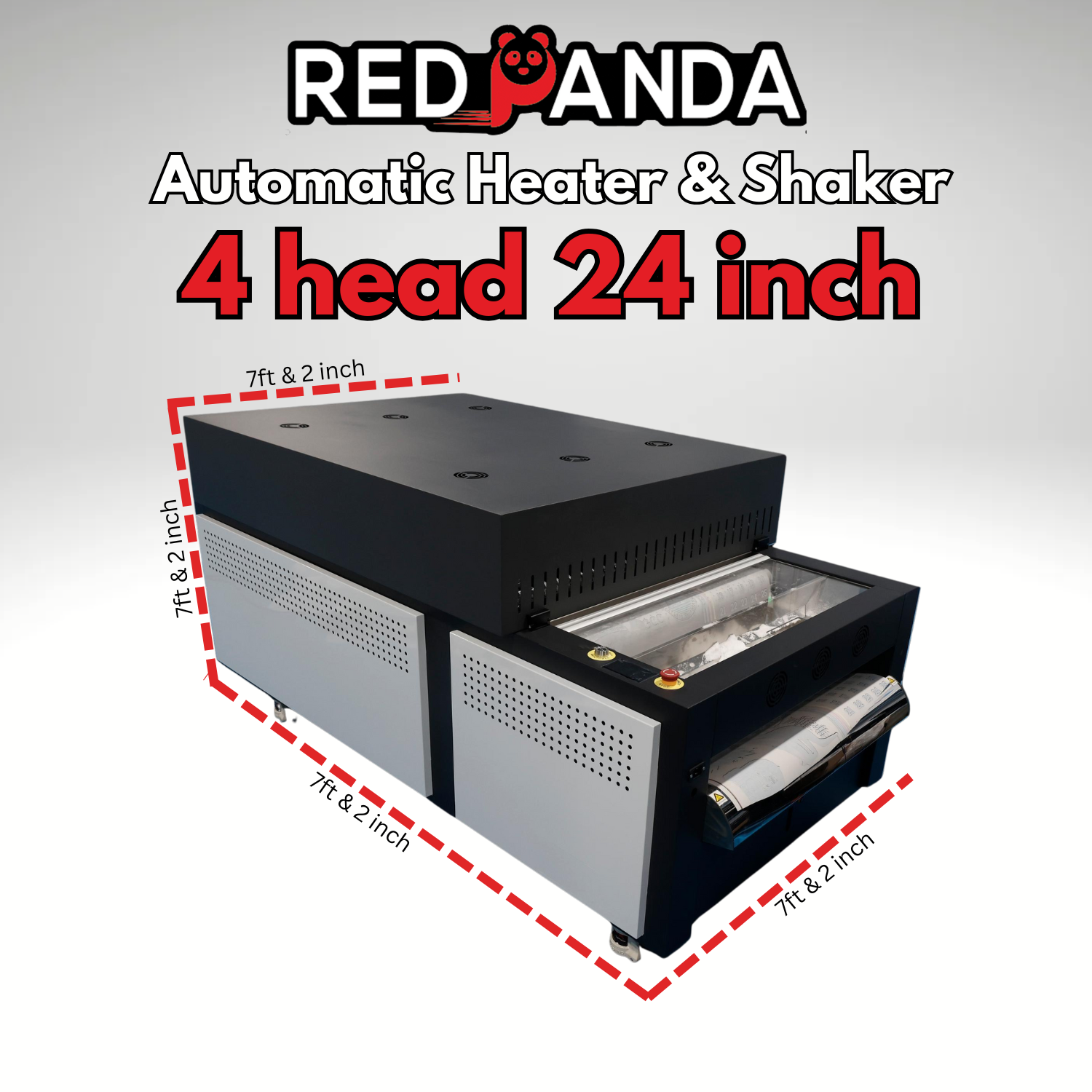
A 24 inch setup is especially useful when paired with an automated shaker and curing system. This allows the printer, powder application, curing, and film take-up process to work as a more complete production line.
Small Business Recommendation
If you are brand new, start with a beginner-friendly printer and learn the workflow. If you already have customers and orders coming in, consider a 13 inch dual-head setup. If your goal is to build a serious DTF transfer or print-on-demand operation, a 24 inch printer with a shaker and curing system is the stronger long-term investment.
Important Features to Compare Before Buying
1. White Ink Circulation
White ink is one of the most important parts of DTF printing. A good DTF printer should support consistent white ink flow because white ink helps create the underbase that makes colors pop on dark and colored garments.
2. Printhead Type
The printhead affects speed, detail, maintenance, and overall print quality. Many professional DTF systems use Epson-style printheads, including I3200 printhead setups on higher-output machines.
3. Shaker and Curing System
For production shops, the shaker and curing system matters just as much as the printer. The shaker applies DTF powder evenly, removes extra powder, cures the adhesive, and helps keep the workflow consistent.
4. RIP Software
DTF printing requires RIP software to control ink channels, white ink layers, color management, print settings, and production output. A good software workflow can save time and reduce operator mistakes.
5. Training and Technical Support
DTF printers are production machines, not regular office printers. You need to understand nozzle checks, daily maintenance, white ink handling, humidity, temperature, film loading, powder curing, and basic troubleshooting. Buying from a seller that offers support can make a major difference.
How Much Does It Cost to Print a DTF Transfer?
The cost to print a DTF transfer depends on the artwork size, ink coverage, film size, powder usage, labor, waste, and whether you are printing single transfers or gang sheets. A small left chest design will cost less to produce than a large full-front design with heavy white ink coverage.
To calculate your real cost, track these items: DTF ink, DTF film, DTF powder, cleaning supplies, labor time, misprints, electricity, packaging, and maintenance parts. Small businesses should price DTF transfers based on total production cost, not just ink and film.
Should You Finance a DTF Printer?
Financing can be useful if you already have demand and want to preserve cash flow. Instead of paying the full equipment cost upfront, financing may allow you to get a production setup, start taking orders, and build revenue while paying over time.
Financing makes the most sense when you have a clear sales plan, a product offer, and a consistent way to bring in orders. South Mid Supply offers access to financing options for eligible DTF printer packages.
DTF Printer Financing Available
Looking for a DTF printer finance option? South Mid Supply offers financing access for eligible printer packages. Apply in minutes, review available options, and choose a bundle-ready setup for your business.
What Supplies Do You Need With a DTF Printer?
A DTF printer is only one part of the setup. To run production, you will need DTF ink, DTF film, DTF powder, cleaning solution, swabs, wipes, dampers, maintenance parts, and heat press equipment.
DTF Ink
CMYK and white DTF ink are needed to print full-color transfers with strong color and underbase coverage.
DTF Film
DTF film is the carrier sheet used to print the design before applying powder and curing the transfer.
DTF Powder
Hot melt adhesive powder bonds the printed transfer to the garment during the heat press process.
Best DTF Printer Setup for Small Businesses in 2026
The best setup depends on your business model. If you are selling custom shirts locally, a smaller printer may be enough to start. If you want to sell DTF transfers or gang sheets, a wider printer and automated shaker setup will help you produce faster. If you want to build a serious print-on-demand or wholesale transfer business, a 24 inch production system is the better long-term direction.
South Mid Supply helps customers compare DTF printer sizes, supplies, printer parts, software workflow, and financing options so they can choose the right setup for their business goals.
Shop DTF Printers and Supplies
Use these quick links to shop equipment, supplies, financing, and support from South Mid Supply.
Frequently Asked Questions
What is the best DTF printer for a small business?
Is a 13 inch DTF printer good for a small business?
When should I buy a 24 inch DTF printer?
Can I finance a DTF printer?
What supplies do I need for DTF printing?
Does South Mid Supply offer DTF printer support?
Ready to Choose Your DTF Printer?
Whether you are starting your first t-shirt business or upgrading to a higher-output production setup, South Mid Supply can help you compare DTF printers, supplies, parts, and financing options.